Flat and low-slope roofing systems that work best for multi-family buildings are the ones designed for long-term performance, not short-term savings. In San Diego, that means selecting systems like TPO, PVC, or modified bitumen that can handle constant sun exposure, seasonal rain, and heavy use across multiple units. The right choice comes down to durability, drainage design, and lifecycle cost.
If you own or manage a multi-family property, you already understand this is not a small decision. One roofing failure does not affect one household. It affects dozens. That is why choosing the right roofing system is not just about materials. It is about protecting your investment, your tenants, and your long-term operating costs.
Here is what you need to understand before making that decision:
- Which flat roofing systems actually perform best for multi-family buildings
- How low-slope roofing options for apartments compare in real-world conditions
- What factors influence long-term cost, maintenance, and tenant disruption
- How to approach roofing system selection with clarity and confidence
If you want straightforward answers and proven commercial roofing solutions backed by real experience, Guardian Roofs can help.
Understanding Flat and Low-Slope Roofing Systems for Multi-Family Buildings
Flat and low-slope roofing systems are the standard for multi-family construction because they are efficient, scalable, and functional. But not all systems perform the same, especially when applied across larger residential properties.
Flat roofing systems rely on waterproof membranes and precise installation to prevent water intrusion. Low-slope roofing systems introduce a slight pitch to help direct water toward drainage points. Both are effective, but only when designed and installed correctly for the building they protect.
For multi-family buildings, these systems must do more than just cover the structure. They must:
- Handle consistent foot traffic from maintenance crews
- Support rooftop equipment like HVAC systems
- Perform reliably across large surface areas
- Maintain performance with minimal disruption to tenants
Why This Matters in Southern California
Flat and low-slope roofing systems that work best for multi-family buildings in San Diego must be built for local conditions.
You are dealing with:
- Year-round UV exposure that degrades roofing materials over time
- Seasonal rain that tests waterproofing and drainage systems
- Heat expansion that stresses seams and connections
- Energy efficiency requirements under California Title 24
There is also a difference between inland and coastal properties. Inland areas experience higher temperatures, which increases thermal stress. Coastal properties deal with moisture and salt exposure, which can accelerate wear. The roofing system you choose must align with those conditions.
What Property Owners Must Evaluate Before Selecting a Roofing System
Choosing the right flat or low-slope roofing system for a multi-family building starts with understanding the full scope of the project.
Budget vs Lifecycle Cost
It is easy to focus on upfront cost, but that is where many property owners make the wrong call. The better question is:
What will this roofing system cost over 20 to 30 years?
Choosing a flat or low-slope roofing system for a multi-family building comes down to balancing installation cost with long-term durability, energy efficiency, and maintenance needs.
Building Structure and Limitations
Not every building can support every roofing system. Structural load, existing roof layers, and drainage design all impact what is possible.
A proper evaluation ensures the system you choose is compatible with the building itself.
Code Requirements and Permits
California regulations influence material selection, insulation requirements, and reflectivity standards. These are not optional. They directly affect which systems qualify for installation.
Tenant Impact and Project Planning
Multi-family roofing projects require careful coordination. Noise, access, and safety must be managed across multiple units. The roofing system you choose can either simplify or complicate that process.
Comparing Flat and Low-Slope Roofing Systems for Multi-Family Buildings
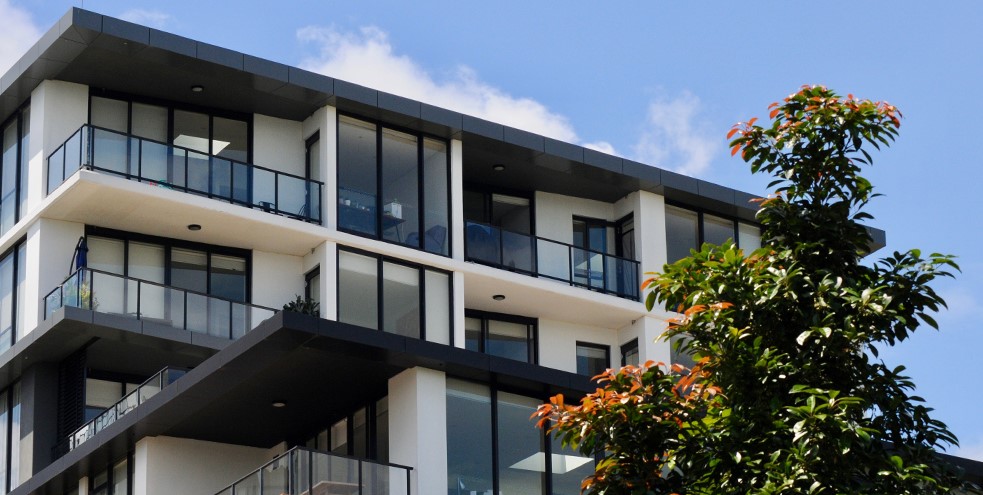
When it comes to commercial roofing solutions for multi-family properties, the goal is not to find the cheapest option. The goal is to find the system that performs consistently over time.
TPO Roofing Systems for Multi-Family Buildings
TPO has become one of the most widely used flat roofing systems for multi-family buildings because it delivers strong performance in high-UV environments.
- Reflective surface reduces heat absorption
- Heat-welded seams create strong waterproofing
- Lightweight and cost-effective for large buildings
For properties focused on energy efficiency and long-term savings, TPO is often the right fit.
PVC Roofing Systems for Low-Slope Apartment Roofs
PVC offers many of the same benefits as TPO but with added durability in certain conditions.
- Strong resistance to chemicals and rooftop contaminants
- Long lifespan with proper installation
- Excellent performance around rooftop equipment
For multi-family buildings with complex rooftop setups, PVC is a reliable choice.
Modified Bitumen Roofing for Durability
Modified bitumen is a layered system designed for strength and longevity.
- Performs well under foot traffic
- Strong resistance to punctures
- Proven performance over decades
This is one of the flat roofing systems that works best for multi-family buildings where durability is a priority.
Built-Up Roofing (BUR) Systems
BUR systems have been used for generations and continue to perform when installed correctly.
- Multiple layers create redundancy
- Strong waterproofing capability
- Long-term reliability
For property managers who prefer a traditional approach, BUR remains a dependable option.
Roof Coating Systems for Extending Roof Life
Roof coatings are not a full replacement, but they play a role in flat and low-slope roofing strategies.
- Extend the life of existing systems
- Improve energy efficiency
- Reduce immediate replacement costs
For buildings with aging roofs that are still structurally sound, coatings can be a strategic solution.
How to Choose the Right Roofing System for Your Multi-Family Property
Choosing a flat or low-slope roofing system for a multi-family building starts with clear priorities.
If Energy Efficiency Is the Goal
TPO and PVC systems reduce heat absorption and lower cooling costs across multiple units.
If Long-Term Durability Is the Priority
Modified bitumen and BUR systems provide strong resistance to wear and foot traffic.
If Budget Constraints Are Driving the Decision
Roof coatings can extend the life of an existing system while delaying full replacement.
If Tenant Disruption Must Be Minimized
Systems with faster installation timelines and less invasive processes should be prioritized.
Choosing the right roofing system is about aligning the system with how the building is used and what the owner expects over time.
Why Drainage Design Determines Whether a Roofing System Succeeds or Fails
Even the best flat roofing systems for multi-family buildings will fail if drainage is not handled correctly.
Flat and low-slope roofs depend on controlled water movement. Without it, water sits, and problems begin.
Key Drainage Components
- Internal drains
- Scuppers
- Proper slope design
Common Failures
- Ponding water that breaks down materials
- Clogged drainage systems
- Improper slope leading to standing water
When evaluating low-slope roofing options for apartments, drainage design must be part of the conversation from the start.
Real-World Application: What Proper Roofing System Selection Looks Like
We worked with a multi-family property that had ongoing leak issues due to an aging system and poor drainage.
Instead of continuing repairs, we installed a TPO system designed specifically for the building’s layout and improved the drainage flow.
The result:
- Elimination of recurring leaks
- Improved energy efficiency
- Reduced maintenance costs
This is what happens when flat and low-slope roofing systems are selected based on performance, not guesswork.
Deep Dive: Performance, Warranties, and Long-Term Value
What really sets flat and low-slope roofing systems apart for multi-family buildings is how they perform over time.
Lifespan Expectations
- TPO and PVC: 20 to 30 years
- Modified bitumen and BUR: 20 to 25 years
- Coatings: 5 to 15 years
Warranty Protection
Guardian Roofs installs systems backed by strong manufacturer warranties, including up to a 50-year manufacturer warranty with Owens Corning products. Full re-roofs include a 10-year workmanship warranty.
Energy Efficiency Impact
Reflective roofing systems reduce heat absorption, which directly lowers cooling costs. Across multiple units, that adds up quickly.
Pros and Cons of Leading Systems
TPO / PVC
- Pros: Energy efficiency, modern performance
- Cons: Requires experienced installation
Modified Bitumen / BUR
- Pros: Durability, long track record
- Cons: Heavier systems, more labor-intensive
Roof Coatings
- Pros: Cost-effective extension
- Cons: Not a permanent solution
With 36 years of experience, Guardian Roofs delivers commercial roofing solutions that align with real-world performance, not just product specs.
What to Expect When You Request a Roofing Proposal
When evaluating flat and low-slope roofing systems for a multi-family building, the process matters just as much as the materials.
Here is what happens when you request a proposal:
- A full evaluation of your current roofing system
- Identification of problem areas, including drainage issues
- Clear recommendations based on your building and goals
- A detailed proposal outlining costs, timelines, and options
- Guidance on financing solutions when needed
This process ensures you are not guessing. You are making a decision based on facts.
Multi-Family Flat Roofing Questions Property Owners Ask Before Choosing a System
Before you move forward with any flat or low-slope roofing system, these are the questions smart property owners ask to avoid costly mistakes and make the right long-term decision.
What flat roofing systems work best for multi-family buildings?
Flat roofing systems that work best for multi-family buildings include TPO, PVC, modified bitumen, and built-up roofing. These systems are designed to handle large surface areas, consistent exposure, and the performance demands of multi-unit properties. The right choice depends on your building’s structure, budget, and long-term goals.
How long do low-slope roofing systems last on apartment buildings?
Low-slope roofing systems last between 20 and 30 years on apartment buildings when properly installed and maintained. Lifespan depends on material quality, installation accuracy, and how well drainage and maintenance are handled over time.
Is TPO or modified bitumen better for multi-family roofing?
TPO is better for energy efficiency, while modified bitumen is better for durability. TPO reflects sunlight and helps reduce cooling costs, while modified bitumen provides stronger resistance to foot traffic and physical wear, making it a solid choice for high-use buildings.
Are roof coatings a reliable option for multi-family properties?
Roof coatings are a reliable option for multi-family properties when the existing roof is still structurally sound. They can extend the life of a roofing system and improve energy efficiency, but they are not a permanent replacement for a failing roof.
Do flat roofing systems require regular maintenance?
Flat roofing systems require regular maintenance at least once or twice per year. Routine maintenance helps prevent drainage issues, identifies early signs of wear, and extends the overall lifespan of the system.
What affects the cost of multi-family roofing projects?
The cost of multi-family roofing projects depends on material selection, roof size, building design, and installation complexity. Labor, accessibility, and the condition of the existing roof also play a major role in determining the final cost.
How do I choose the right roofing system for my building?
Choosing the right roofing system starts with evaluating your building’s structure, budget, and long-term performance expectations. A detailed proposal from an experienced roofing team helps you compare options and make a confident decision based on facts, not guesswork.
Final Thoughts: Choosing the Right System Protects Everything Under It
The right flat or low-slope roofing system for a multi-family building is one that delivers consistent performance year after year. The wrong choice can lead to ongoing repairs, tenant disruptions, and rising costs.
You deserve to make that decision with clarity.
Guardian Roofs brings 36 years of experience, top-tier certifications, and a reputation built on quality workmanship and clear communication. We help property owners choose roofing systems that perform in real-world conditions, not just on paper.
Schedule your free estimate today.
