If your San Diego County home sits in a designated fire-hazard zone and you’re planning a re-roof, your new roof almost certainly needs fire-resistant roofing that meets Class A fire rating standards under California’s newly consolidated wildfire building code. Coverage of these rules expanded in 2026 to include many previously exempt neighborhoods, so a roof that was compliant five years ago may not be compliant today.
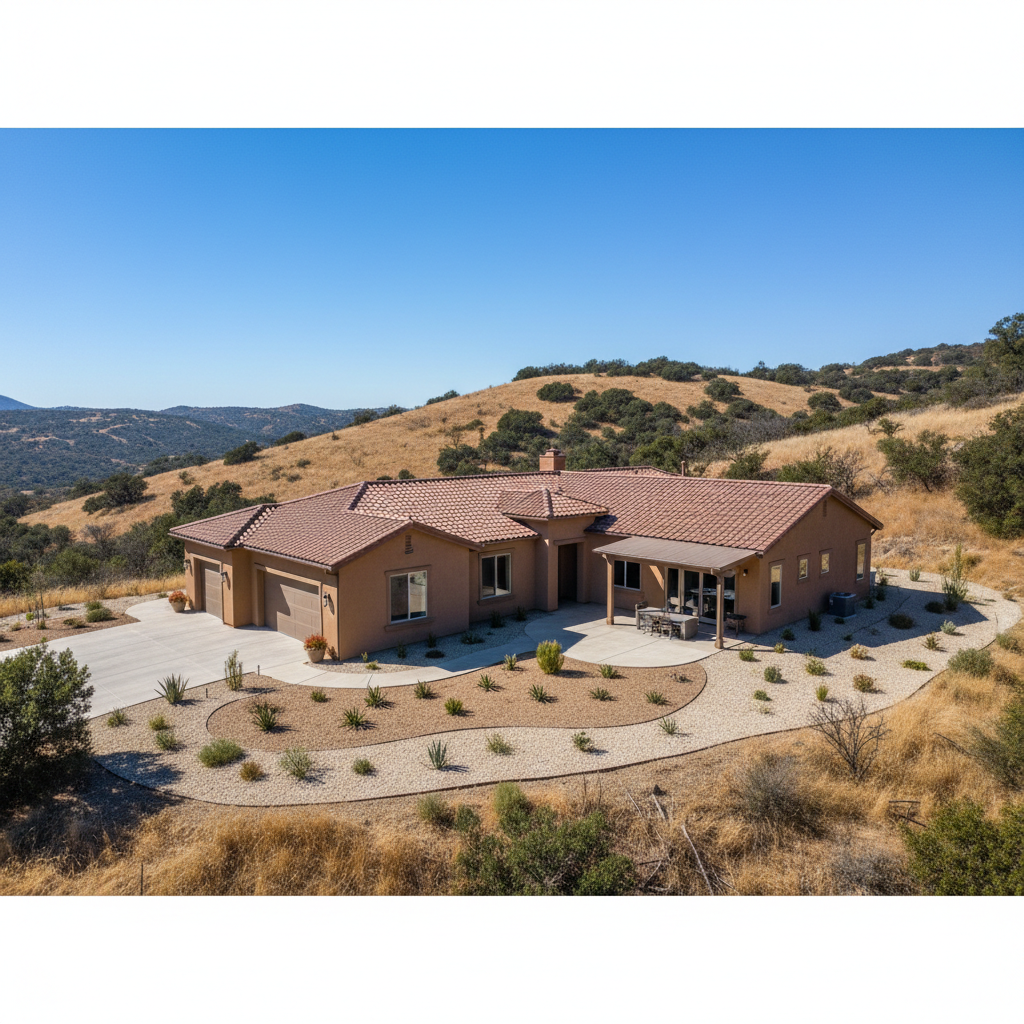
This guide covers what actually changed, what Class A really means for material choice, and the concrete steps that keep a San Diego County home both compliant and genuinely safer during fire season.
Key Takeaways
- Effective January 1, 2026, California consolidated its wildfire construction rules into Title 24, Part 7, the California Wildland-Urban Interface Code, expanding coverage to more San Diego County neighborhoods than before.
- If your home sits in a designated Fire Hazard Severity Zone and you’re doing a full re-roof, plan on a Class A fire-rated assembly, not just a Class A-rated shingle laid over non-compliant components.
- Zone Zero rules, phasing in for enforcement in 2026, require removing combustible material within 5 feet of the structure, including anything sitting directly against roof edges and gutters.
- Homeowners who upgrade to a documented Class A roofing assembly often see insurance premium reductions of 5 to 25 percent, and in some fire-hazard zones, it’s what keeps a policy renewable at all.
What Actually Changed in San Diego County’s Fire Code for 2026
San Diego County’s fire prevention rules used to live across several different chapters and ordinances. As of the 2026 code cycle, the county consolidated its Building Code Requirements and Defensible Space chapters into a standalone California Wildland-Urban Interface Code, referenced as Title 24, Part 7.
The practical effect for homeowners: coverage expanded. Neighborhoods that were previously exempt from strict wildfire construction standards because they sat just outside a mapped fire zone are now included if they fall within a High or Very High Fire Hazard Severity Zone inside city limits. If you haven’t checked your property’s fire hazard zone designation recently, it’s worth confirming before you plan any roofing work, since the designation determines which rules actually apply to your project.
What Class A Fire-Rated Roofing Actually Requires
“Class A” describes how a roofing assembly performs against fire exposure, not just the material sitting on top. This distinction trips up a lot of homeowners planning fire-resistant roofing for the first time.
It’s an Assembly Rating, Not Just a Shingle Rating
A Class A shingle installed over non-compliant underlayment, decking, or venting does not automatically make the whole roof Class A. The rating applies to the complete assembly: covering, underlayment, decking, and how vents and penetrations are sealed. If your current roof isn’t Class A rated as a full assembly, you generally can’t just add a compliant product on top and call it done.
Full Re-Roofing Is Usually Required
Chapter 7A of the California Building Code, which the new Title 24 Part 7 references, sets the specific standards for updated underlayment, ember-resistant venting, and sealed roof penetrations. Meeting these standards on an older roof typically means a full tear-off and rebuild of the roofing assembly rather than a partial upgrade.
Which Materials Qualify
Asphalt composition shingles rated Class A, concrete and clay tile, and most standing-seam metal roofing systems can all meet Class A requirements when installed as a complete compliant assembly. Wood shake, even when treated, is a much harder path to compliance and often isn’t the right choice for a home in a mapped fire-hazard zone.
Zone Zero: The 5-Foot Rule That Affects Your Roofline
Beyond the roofing material itself, California’s Zone Zero requirements focus on the immediate 5-foot perimeter around a structure, including everything that touches or overhangs the roof.
What Has to Go
Dead vegetation, stacked wood piles, combustible mulch, and any flammable material like stored gas cans or propane tanks within 5 feet of the home need to be removed. For roofing specifically, this includes overhanging tree limbs that drop debris into gutters and valleys, and anything combustible stored directly against an exterior wall beneath the roofline.
Gutters and Roof Valleys
Dry leaves and needles collecting in gutters and roof valleys are a genuine ember-catch risk during a wildfire, not just a maintenance nuisance. Homes in fire-hazard zones should have gutters cleared more frequently than the twice-a-year schedule that works fine in lower-risk areas.
Defensible Space Beyond the Roofline
California’s broader defensible space rules, under Public Resources Code section 4291, require 100 feet of clearance around structures in State Responsibility Areas, split into two zones.
Zone 1: 0 to 30 Feet
The area closest to the home requires removal of dead vegetation and general fuel reduction. This zone has the most direct effect on ember exposure to the roof and exterior walls.
Zone 2: 30 to 100 Feet
Further from the structure, the requirement shifts to plant spacing rather than full removal, reducing the chance that a ground fire can carry continuously toward the home.
Which San Diego County Areas Are Most Affected
Inland and foothill communities carry the highest concentration of Fire Hazard Severity Zone designations in San Diego County, including areas around Ramona and Alpine, where Guardian Roofs has served homeowners for years. Coastal and urban-core neighborhoods generally carry lower designations, but the 2026 code expansion has pulled some previously exempt pockets, even closer to the coast, into mandatory compliance. Checking your specific parcel’s designation is the only reliable way to know which rules apply, since zone boundaries don’t always follow obvious lines like city limits or major roads.
What This Means If You’re Planning a Re-Roof
If you’re in a mapped fire-hazard zone and your existing roof isn’t a documented Class A assembly, plan your re-roof around full compliance rather than a partial upgrade. A few practical steps:
- Confirm your property’s Fire Hazard Severity Zone designation before getting estimates, so every contractor is quoting against the same requirement.
- Ask any roofing contractor for the specific Class A assembly components they’re proposing, not just the shingle or tile brand.
- Budget for updated underlayment and ember-resistant venting as part of the project, not as a separate future expense.
- Clear the 5-foot Zone Zero perimeter and check gutters and valleys as part of your regular home maintenance, independent of when your roof itself gets replaced.
- Ask your insurance carrier directly what documentation they need to apply a Class A roofing discount once the work is complete.
If you’re weighing a targeted repair against a full compliance re-roof, our roof repair page covers how we evaluate that tradeoff.
How Guardian Roofs Approaches Fire-Zone Re-Roofs
Guardian Roofs has served San Diego County since 1984 and holds GAF Master Elite and Owens Corning Platinum Preferred contractor status. For homes in a designated fire-hazard zone, we confirm the property’s zone designation before finalizing a proposal, spec a complete fire-resistant roofing assembly rather than a Class A-rated shingle alone, and document the finished installation the way insurance carriers typically require for a fire-rating premium discount.
Frequently Asked Questions
How do I find out if my San Diego County home is in a Fire Hazard Severity Zone?
The most reliable source is CAL FIRE’s Fire Hazard Severity Zone maps, which San Diego County references directly for its own fire code enforcement. Your roofing contractor or the county’s fire authority can also confirm your specific parcel’s designation.
Can I just install a Class A shingle over my existing roof to comply?
No. Class A is an assembly rating that covers the shingle or tile, the underlayment, the decking, and how vents and penetrations are sealed. Installing a compliant shingle over a non-compliant assembly generally does not meet the requirement, and most fire-zone re-roofs require a full tear-off.
Will a Class A roof lower my homeowner’s insurance premium?
Often, yes. Homeowners who upgrade to a documented Class A assembly commonly see premium reductions in the 5 to 25 percent range, and in some designated fire zones, it can be what keeps a policy renewable at all. Ask your carrier directly what documentation they require.
What roofing materials meet Class A requirements?
Asphalt composition shingles rated Class A, concrete and clay tile, and most standing-seam metal systems can meet the requirement as part of a compliant full assembly. Untreated wood shake generally does not, and even treated wood shake is a difficult path to compliance in a mapped fire zone.
Do Zone Zero rules apply to my roof specifically?
Yes, in part. Zone Zero’s 5-foot perimeter rule covers anything combustible touching or overhanging the structure, which includes tree limbs over the roofline and debris collecting in gutters and valleys. Keeping this zone clear is a maintenance task separate from the roofing material itself, but it’s part of full fire-code compliance.
Schedule a Fire-Zone Roof Assessment
If you’re unsure whether your current roof meets San Diego County’s 2026 wildfire code requirements, Guardian Roofs offers free inspections that include a Class A compliance check. Request your free estimate online to get started.
