
Let’s get something straight. When it comes to protecting your home or property, your roof does not get days off. It is exposed to sun, salt, wind, and temperature swings year-round. Here in San Diego County, that wear and tear can change dramatically from one neighborhood to the next.
At Guardian Roofs, we have been serving homeowners and property managers across San Marcos, Encinitas, and the greater San Diego area for 36 years. We have seen roofs last decades, and we have seen others fail far too early. The difference usually comes down to whether the roof was built for the local microclimate, not just the size of the house.
This article is about clarity. You deserve to know the facts before making a roofing decision that affects your property’s value, comfort, and long-term reliability.
What You Will Learn in This Guide
- How coastal and inland weather affects roofing performance
- What smart homeowners and property managers ask before choosing materials
- Which roofing systems hold up best in different parts of San Diego County
- Why local experience still matters
- How to move forward with confidence and clear expectations
If you want straightforward guidance for your property, Guardian Roofs can help.
What Microclimates Mean for Your Roof
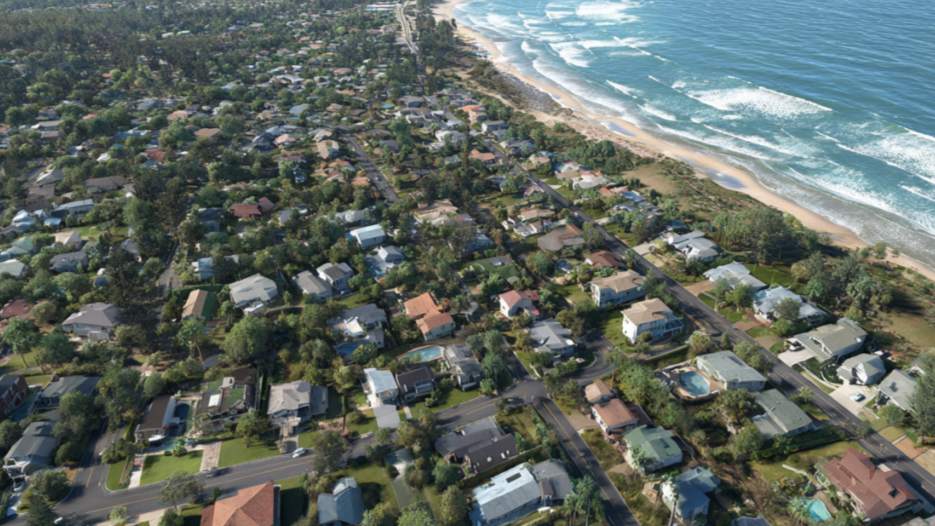
A microclimate is a localized weather pattern that behaves differently from surrounding areas. In San Diego County, microclimates are shaped by ocean proximity, elevation, and terrain. Two homes only a few miles apart can face very different roofing challenges.
In practical terms, this means your roof may be exposed to:
- Salt and moisture near the coast
- High heat and intense sun inland
- Strong winds or sudden temperature shifts in valley and hilltop areas
If your roofing system is not designed for these conditions, problems show up early. This is not theory. It is what we see on real homes every week.
What to Consider Before Making Roofing Decisions
Budget Should Reflect Conditions, Not Shortcuts
A good roofing decision is not about spending the most money. It is about spending it wisely. Coastal homes often require moisture-resistant materials and upgraded waterproofing. Inland homes benefit from systems that manage heat and reduce energy loss. Cutting corners usually costs more later.
Permits and Local Codes Are Not Optional
San Diego County has strict requirements tied to fire ratings, energy efficiency, and wind exposure. A qualified roofing company manages the permitting process and installs systems that meet local code. This protects both your investment and your resale value.
Materials Must Match the Environment
Not every roofing material performs the same way in every climate. Choosing a product based only on appearance or price is a common mistake. Long-term performance matters more.
Experience and Certification Make a Difference
Guardian Roofs is family-owned, A+ BBB rated, and certified as an Owens Corning Platinum Preferred Contractor and GAF Master Elite. These credentials reflect training, accountability, and proven workmanship, not marketing language.
Coastal Roofing Challenges and Smart Solutions
Salt, Moisture, and Organic Growth
Homes near the coast face constant exposure to salt air and moisture. Over time, this can corrode metal components, weaken underlayment, and encourage algae or mold growth.
Roofing systems that perform well near the coast include:
- Fiberglass asphalt shingles with algae resistance
- Clay or concrete tile
- PVC and TPO flat roofing systems
- High-performance underlayments designed for humid conditions
The goal is not just to shed water, but to stay sealed and stable year after year.
Inland Roofing Conditions in San Marcos and Nearby Areas
Heat, Sun Exposure, and Thermal Stress
Inland communities such as San Marcos experience higher temperatures and stronger UV exposure. Over time, this can cause shingles to dry out, curl, or lose granules. Poor attic ventilation can trap heat, stressing both the roof and the home’s cooling system.
Effective solutions for inland homes include:
- Cool roof systems that reflect solar heat
- Proper attic insulation and ventilation
- Light-colored or heat-resistant roofing materials
- Manufacturer-approved systems rated for high-temperature zones
These choices improve durability and can reduce long-term energy costs.
Transitional Zones Require Balanced Systems
Some parts of San Diego County experience a mix of coastal and inland conditions. These areas may deal with moisture, heat, and wind throughout the year.
For these properties, balanced roofing systems work best. Tile roofs with upgraded waterproofing or high-quality shingles paired with reinforced underlayment provide reliable protection across changing conditions.
Roofing Material Performance at a Glance
Here is how common roofing materials generally perform across local microclimates:
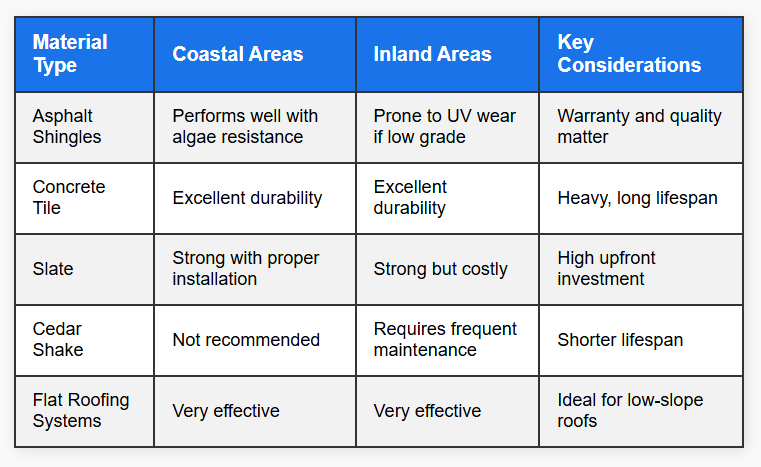
Material selection also affects warranty coverage. Using the wrong product in the wrong environment can reduce or void manufacturer protections.
How Guardian Roofs Approaches Every Project
When we prepare an estimate, we take the time to explain:
- What your roof has been exposed to
- Where wear is occurring and why
- Which solutions make sense for your location and budget
Every full re-roof includes a 10-year workmanship warranty. We also offer clear proposals, competitive pricing, and financing options for most projects. Our crews are known for being respectful, organized, and thorough from start to finish.
Common Roofing Questions from San Marcos Homeowners and Property Managers
We get a lot of great questions from homeowners and property managers across San Marcos and San Diego County. Whether you’re planning a full re-roof or just comparing options, here are the answers to some of the most important questions you should be asking.
What is the best roofing system for homes in San Marcos, CA?
The best roofing system for homes in San Marcos, CA is one that stands up to high heat, strong UV exposure, and dry inland conditions. We recommend UV-resistant shingles, proper attic ventilation, and insulation that controls indoor temperature and prevents energy loss.
Do coastal homes need different roofing materials?
Yes, coastal homes need different roofing materials to resist salt, moisture, and corrosion. Standard materials can fail early near the ocean unless they’re rated for high humidity and sea air exposure.
How can I tell which microclimate my home is in?
You can tell which microclimate your home is in by considering your distance from the coast, elevation, and local weather patterns. Our team evaluates these factors during your estimate so we can recommend materials that match your specific conditions.
Are roofing warranties affected by climate?
Yes, roofing warranties are affected by climate if the wrong product is installed for your area. Manufacturers often require specific materials or installation methods to maintain full warranty coverage in hot, coastal, or high-moisture zones.
What roofing option improves energy efficiency the most?
The roofing option that improves energy efficiency the most in inland San Diego areas is a cool roof system paired with attic insulation. These upgrades reflect solar heat, reduce indoor temperatures, and lower energy costs.
Do I need a permit to replace my roof?
Yes, you do need a permit to replace your roof in San Diego County. Guardian Roofs handles all permitting requirements for you, so the job is code-compliant and worry-free from start to finish.
Final Thoughts on Roofing Performance in San Diego County
Roofing performance is not just about the materials you choose. It is about how those materials respond to your local climate over time. Homes near the coast face different risks than those inland, and smart roofing decisions reflect that reality.
Guardian Roofs brings 36 years of experience, top-tier certifications, and a reputation built on quality craftsmanship and honest service. We focus on building roofing systems that last, protect families and properties, and deliver long-term value.
If you are ready for straightforward guidance and dependable results, schedule your free estimate today.
