
Your View Is Beautiful. The Climate? Not So Much.
If you’re lucky enough to live near the coast in San Diego County, you know the view is worth every penny. But here’s what most homeowners don’t realize until it’s too late: your roof sees that ocean view a lot differently.
At Guardian Roofs, we’ve been in this business for over 36 years. And we’ve seen what salt air, UV exposure, and high winds can do to a roof—especially one that wasn’t built for it.
We’re not here to sell you something you don’t need. We’re here to help you understand what your roof is really dealing with, and how to make smart, long-lasting decisions that protect your home and your wallet.
Here’s what you’ll take away from this post:
- What makes coastal roofing different from inland
- How salt, sun, and wind break down materials faster than you think
- What types of roofing systems work best in different microclimates
- Why proper installation, certified warranties, and the right materials matter
- How Guardian Roofs builds long-term value into every job we do
Want to get ahead of the problem? Guardian Roofs can help. We offer honest proposals, certified work, and clean, professional crews.

Coastal Weather Is No Joke: Here’s Why It Matters
Let’s start with the basics. Coastal living brings with it a set of weather challenges that most inland homeowners never deal with. If your home is within a few miles of the ocean, your roof is fighting three constant battles:
Salt Air Roof Damage
Salt doesn’t just rust your patio furniture. It corrodes metal flashing, eats away at fasteners, and compromises underlayment layers beneath your shingles or tiles. Over time, this weakens your roof system from the inside out.
UV Roof Exposure
Whether you’re in San Marcos, Encinitas, or Carlsbad, that Southern California sun is relentless. UV rays break down shingles, dry out sealants, and bleach tile and asphalt. Inland homes often take the brunt of this, especially without marine fog to cut the heat.
Wind-Resistant Roofing Needs
Near the coast, wind can be unpredictable and aggressive. If your shingles aren’t properly fastened, or your roof edges aren’t reinforced, gusts can peel back materials before you even notice there’s a problem.
If your roofing system wasn’t built to handle these three factors, it’s going to fail early. And let’s be clear—failure doesn’t always mean collapse. It can mean leaks, rot, rising energy bills, and warranties that don’t hold up.
You deserve better than that.
What Smart Homeowners and Property Managers Need to Know First
Before you make any roofing decisions—repairs, replacement, or re-roofing—there are a few key things to think about.
1. Know What You’re Paying For
Premium materials might cost more up front, but they’re designed to withstand salt air, wind, and UV exposure. Don’t just go with the cheapest bid. Go with the team that knows your neighborhood and your climate.
2. Permits Aren’t Optional
Every city has its own roofing codes. San Marcos and surrounding cities follow strict Title 24 energy rules and require fire-rated materials in certain areas. Guardian Roofs takes care of all permitting, so you don’t get caught off guard.
3. Not Every Material Works Everywhere
Some materials are beautiful but can’t survive coastal weather. That sleek metal roof? It may corrode if it’s not marine-rated. Those basic shingles? They might peel up in strong wind if not installed properly.
4. Warranties Require Certified Installers
Let’s talk about peace of mind. If your roofer isn’t certified by manufacturers like Owens Corning or GAF, those “lifetime warranties” don’t mean much. We’re both—and we install every roof to spec, so you get full warranty protection.
Guide: The Real Differences Between Coastal and Inland Roofing
Salt Air Doesn’t Just Smell Like the Beach
What Salt Air Does to Your Roof
Salt air causes corrosion that breaks down your roof from the inside out. Over time, even stainless steel can start to show wear if it’s not properly sealed or flashed. This is especially critical near the coast, where salty moisture hangs in the air daily.
That’s why we use coastal-grade fasteners, metal flashing, and underlayment—because anything less won’t last.
The Sun Doesn’t Just Fade Paint. It Destroys Roofs.
How UV Roof Exposure Speeds Up Wear
UV rays break down roofing materials faster than anything else. In inland areas like San Marcos, CA, the sun hits hard and stays long. Shingles lose their granules. Tiles crack. Coatings fail. That cheap roof might look fine for five years—but after that, it starts costing you.
If you want a roof to last 20 to 30 years, you need materials with high UV ratings, and proper ventilation underneath to keep things cool.
Wind Uplift Is Real—And It’s Not Just a Coastal Issue
Why Wind Resistance Should Be Built In
Wind damage isn’t just about hurricanes. All it takes is one strong gust to catch a weak shingle or tile edge. We’ve seen full rows of shingles peel back because the nails weren’t placed right, or because the starter course was skipped.
Our roofing crews install every system to exceed local wind ratings. No shortcuts, no excuses. That’s what real protection looks like.
Deep Dive: Material Selection, Energy Savings, and Long-Term Value
Let’s look at how different materials hold up in the environments we serve:
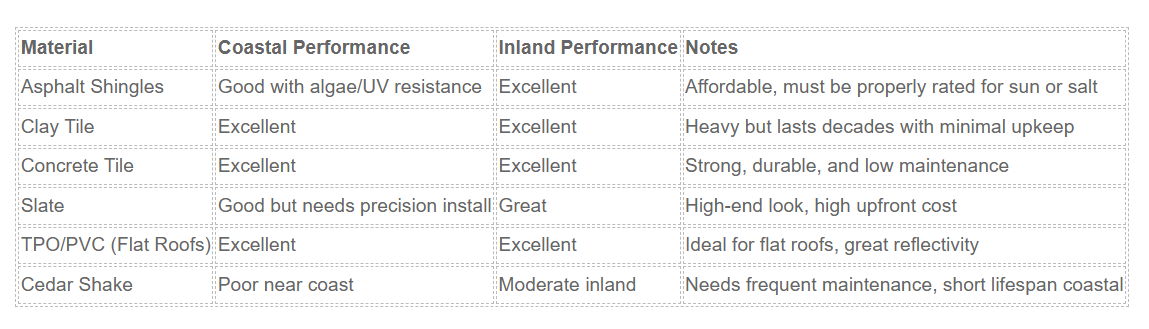
And let’s be real, energy efficiency matters too. A hot attic means a hotter home. We design roofs that work with your insulation and ventilation systems to reduce cooling costs and extend material life.
Warranties? We’ve got you covered. Our full re-roofs come with a 10-year workmanship warranty, plus the strongest manufacturer warranties available—because we do it right the first time.
Coastal Roofing Questions from San Marcos and San Diego Homeowners
If you’re living near the coast or managing a property in San Marcos, CA, chances are you’ve got a few questions about how salt air, sun, and wind affect your roof. Below are the most common concerns we hear from smart homeowners and property managers—answered clearly and directly.
What roofing materials are best for coastal homes in San Diego County?
The best roofing materials for coastal homes in San Diego County are clay or concrete tiles, UV- and algae-resistant asphalt shingles, and flat roof systems like TPO or PVC. These materials are designed to withstand salt air corrosion and resist long-term damage from wind and sun exposure.
How does salt air damage my roof?
Salt air damages your roof by corroding metal components and breaking down underlayment over time. This hidden corrosion weakens the roofing system and often leads to premature leaks or failure if not addressed with the right materials.
Is UV exposure worse inland or on the coast?
UV exposure is typically worse inland, especially in areas like San Marcos, CA, where there’s less marine fog to filter sunlight. Constant sun accelerates the breakdown of shingles, sealants, and coatings unless UV-rated materials are used.
Do I need special permits to replace a roof in San Marcos?
Yes, you do need special permits to replace a roof in San Marcos. Each city within San Diego County has specific roofing codes and regulations, and our team handles all permitting to keep your project compliant from start to finish.
What’s the best way to improve wind resistance for my roof?
The best way to improve wind resistance for your roof is to use roofing systems rated for high-wind zones and to install them using proper fastening methods. This includes reinforced edges, starter strips, and certified materials that won’t lift or tear during storms.
Can a better roof reduce my energy bills?
Yes, a better roof can absolutely reduce your energy bills by reflecting solar heat and improving attic ventilation. A cool roof system combined with proper insulation helps maintain indoor comfort and reduces strain on your HVAC system year-round.
Final Thoughts: Build It Right or Fix It Twice
If there’s one thing we’ve learned after 36 years in this business, it’s this—your roof is only as good as how it was built, and who built it. Whether you’re dealing with salt air, UV damage, or coastal winds, your roofing system has to match your environment.
At Guardian Roofs, we back every full re-roof with a 10-year workmanship warranty, install only top-rated materials, and give clear, honest proposals. No games. No shortcuts. Just real protection that lasts.
Want to learn more about how your climate affects your roof? Read our full breakdown in How San Diego’s Microclimates Affect Roofing Performance More Than You Realize.
Ready to get started? Schedule your free estimate today. We’ll give you the facts, walk you through the options, and build the kind of roof you don’t have to worry about.
