
If you own or manage a commercial property in Orange County, your roof isn’t just a structure. It’s a major financial decision. Choose the wrong system, and you’ll be dealing with leaks, energy waste, and avoidable repairs. Choose the right one, and your roof works for you quietly for decades.
At Guardian Roofs, we’ve spent over 36 years helping commercial property owners make smart roofing decisions. We’re a family-owned company and certified as an Owens Corning Platinum Preferred and GAF Master Elite contractor. Our goal is simple: help you get the best roof for your building, without wasting money.
In this guide, we’ll break down the differences between flat and steep-slope commercial roofs, especially in Orange County’s climate.
What you’ll learn:
- How flat and steep-slope roofs actually perform
- What roofing system fits your property and budget
- The long-term maintenance and cost factors to keep in mind
Need help today? Get your no-pressure estimate.
Why Your Roof Design Matters in Orange County
Climate Drives Roofing Choices
Orange County has a mild climate most of the year, but the sun exposure is constant. That heat builds up and can wear down your roof faster than you’d expect. Reflective materials and proper insulation are important, especially on low slope roofing.
Building Codes Aren’t Optional
Commercial roof design in Orange County has to meet California Title 24 energy codes. That includes insulation values, reflectivity standards, and material performance. You don’t want to install a system that fails inspection or creates problems down the road.
Local Experience Helps You Avoid Mistakes
Zoning, height restrictions, and permitting can all affect your options. That’s why working with a contractor who’s local, certified, and experienced in commercial projects saves you time and money.
What’s the Difference Between Flat Roofs and Steep-Slope Roofs?
Flat Roofs: A Practical Choice for Commercial Buildings
Flat roofs, also called low slope roofing, have a pitch under 10 degrees. They’re common on commercial buildings for good reason.
Why flat roofs work:
- Less expensive to install on large buildings
- Easy to access for maintenance or HVAC repairs
- Ideal for solar panels and energy-saving roof coatings
Flat doesn’t mean low quality. When designed properly, a flat roof offers excellent value and long-term durability.

Steep-Slope Roofs: More Style, More Cost
Steep-slope roofs have a pitch greater than 18.5 degrees. You’ll see them on churches, custom retail buildings, and properties with higher curb appeal goals.
Why some choose steep-slope designs:
- Excellent natural drainage during rain
- Classic architecture and more visible height
- Attic space or vaulted interior design
They look great, but they also cost more to install and maintain.
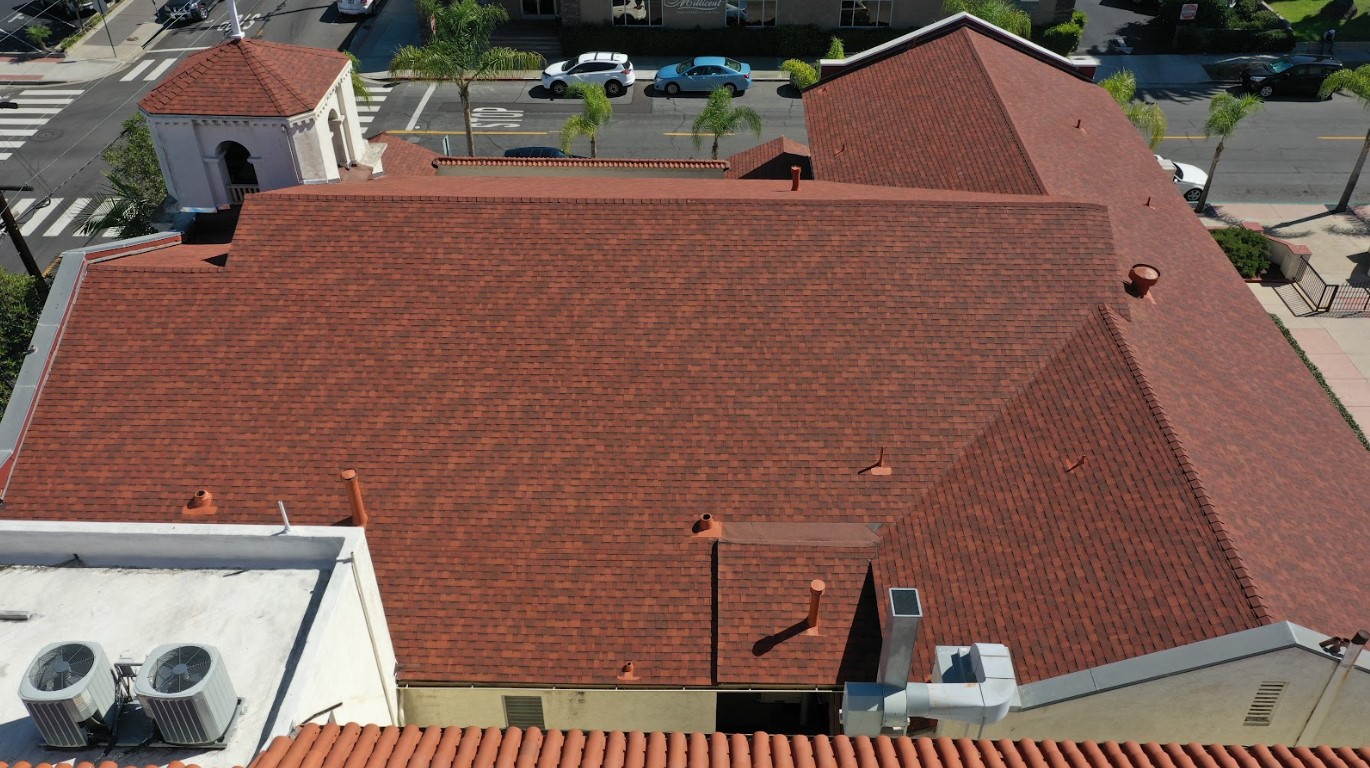
Comparing Flat and Steep-Slope Roofs: What You Need to Know
Design and Functionality
Here’s what matters most in the real world:
- Drainage: Steep-slope roofs are better at shedding water
- Usable rooftop space: Flat roofs allow for solar, HVAC, and walkable space
- Structure: Steep-slope systems require more framing and support
- Energy performance: Flat roofs depend on insulation and cool roof coatings to keep buildings efficient
Installation and Cost Differences
Flat roofs generally cost less to install. They take less labor and fewer materials, especially on large buildings. Steep-slope systems are more complex, which drives up price and time.
Not sure what pitch you need? A roof pitch calculator gives you a visual baseline, but local code and structural conditions ultimately guide the decision.
Best Roofing Materials for Each System
Flat Roofing Materials
These are the top picks for commercial flat roofs in Southern California:
- TPO: Energy-efficient and highly reflective
- PVC: Tough, flexible, and ideal for grease-heavy environments
- Built-Up Roofing (BUR): Excellent thermal performance and durability
These systems work well when combined with cool roof solutions designed for our climate.
Steep-Slope Materials
If you’re going with a pitched design, here’s what works:
- Asphalt shingles: Affordable and widely used
- Metal roofing: Long-lasting, lightweight, and energy-efficient
- Clay or concrete tile: Durable with a clean, professional look
Your material choice affects more than aesthetics. It impacts warranty coverage, installation cost, and long-term maintenance.
Pros and Cons of Flat Roofs on Commercial Properties
Why Flat Roofs Are a Smart Choice
- Lower upfront cost
- Easier maintenance access
- Better use of rooftop space
Flat roofs are common for industrial, multifamily, and office buildings for a reason. They’re functional and budget-friendly.
What to Watch Out For
- Drainage must be done right, or water can pool
- Maintenance is essential to prevent leaks
- They need stronger insulation for thermal performance
Flat roofs only become a problem when they’re neglected or poorly installed. That’s not how we do things at Guardian Roofs.
Pros and Cons of Steep-Slope Roofs for Commercial Use
Why Property Owners Choose Steep Slopes
- Great water runoff during rain
- Materials often last longer
- Allows for extra interior space
Steep-slope roofs are a good fit for buildings where appearance matters, like retail stores or churches.
What to Consider
- Higher upfront cost
- Can be harder to maintain or repair
- May not meet zoning limits in some commercial districts
This isn’t a bad option. Just make sure the added cost lines up with the return you’re getting.
How Orange County Climate and Building Codes Impact Your Roof
Dealing with Local Weather
Rain isn’t frequent, but when it hits, you want to be ready. Flat roofs need proper drainage and sealing. Steep-slope roofs handle runoff well, but both need strong insulation to reduce heat gain.
Codes, Zoning, and Height Limits
Some areas in Orange County restrict roof height. That often rules out steep slopes for commercial properties. Flat roofs are easier to approve and design within those boundaries.
We’ve worked with city planners across the region. We’ll make sure your project is code compliant and ready for inspection.
Maintenance and Roof Lifespan
Flat Roofs Need Routine Attention
Inspections, drainage checks, and surface maintenance are part of the package. If you plan for it, it’s no big deal. If you ignore it, costs add up.
Steep-Slope Roofs Last Longer but Cost More to Fix
They don’t need as much maintenance, but repairs are harder and more expensive when they do.
ROI: What Do You Really Get?
- Flat roofs: 20 to 30 years when maintained well
- Steep-slope roofs: 30 to 50 years depending on material
Pay attention to the full picture—installation cost, energy performance, repairs, and replacement cycles.
For more on long-term roof value, read our post on modern roofing systems.
Which Roof Type is Right for Your Building?
Know Your Property’s Needs
- Flat roofs work well for HVAC and solar installs
- Steep-slope roofs bring visual appeal, but need more structure
- Use a pitch calculator and talk to your contractor to confirm what works
Match the Roof to Your Industry
- Flat roofs are best for warehouses, apartments, and offices
- Steep-slope systems suit storefronts, custom buildings, and churches
Thinking About Switching?
Converting from flat to steep-slope is a big job, but sometimes necessary. Especially if you’re dealing with drainage issues or code updates. Talk to us before you commit.
Still comparing options? Here’s our full guide to commercial roof types.
FAQs About Flat vs Steep-Slope Roofing for Commercial Buildings in Orange County
If you’re comparing flat roofs and steep-slope roofs for your commercial property, you’re not alone. These are some of the most common questions we hear from Orange County building owners and managers trying to make the best long-term decision.
Is a flat roof better for commercial buildings in California?
Yes, a flat roof is often better for commercial buildings in California. Flat roofs are more common across the state due to their affordability, ease of installation, and ability to support solar panels and HVAC systems. In dry climates like Orange County, flat roofs offer great utility and cost savings.
What’s the most durable material for a commercial roof?
The most durable materials for commercial roofs are TPO and metal. TPO offers strong UV resistance and energy efficiency, while metal roofs are long-lasting and low maintenance. The right choice depends on your building’s use, climate exposure, and budget.
Are cool roof systems more effective on flat or steep-slope roofs?
Cool roof systems are generally more effective on flat roofs. Flat roofs have more surface area exposed to the sun, which makes reflective coatings more efficient at reducing heat and lowering energy bills.
How do I figure out the right roof pitch for my commercial building?
You can figure out the right roof pitch for your commercial building by using a roof pitch calculator and consulting with a roofing contractor. Structural limits, building codes, and functional needs (like drainage or solar placement) all play a role in determining the proper slope.
Do steep-slope roofs last longer than flat roofs?
Yes, steep-slope roofs typically last longer than flat roofs. Depending on the materials used, steep-slope systems can last 30 to 50 years, while flat roofs usually last 20 to 30 years with proper care. However, long-term value also depends on maintenance, insulation, and energy efficiency.
Do flat roofs require more maintenance than pitched roofs?
Flat roofs do require more routine maintenance than pitched roofs. Since they don’t drain as quickly, debris, pooling water, and sealant wear need to be checked more frequently. Preventative maintenance keeps problems from becoming costly repairs.
Can a flat roof be converted to a steep-slope roof?
Yes, a flat roof can be converted to a steep-slope roof, but it’s a major structural project. Conversions are typically done to improve drainage, meet code changes, or enhance appearance. Talk to a contractor to weigh the costs and benefits based on your building.
Final Take: Choose the Roof That Works for Your Business
There’s no one-size-fits-all solution. Both flat and steep-slope roofs can be great—when they’re installed for the right reasons on the right building.
At Guardian Roofs, we help you make informed, financially sound decisions. We’ve worked with commercial properties of every size for over 36 years and know how to build roofs that last.
We offer:
- Certified installation from GAF and Owens Corning systems
- Next-day estimates (based on availability)
- 50-year product warranties on eligible systems
- Financing through Wells Fargo, Synchrony, Mosaic, and Ygrene
No pressure. Just the facts and fair pricing.
Get your no-pressure estimate today. Need help with financing or planning your next roof upgrade? Let’s talk.
