California atmospheric rivers usually do not create roof problems out of nowhere. They expose weak spots that built up during dry weather, including cracked sealants, clogged drainage, brittle shingles, worn underlayment, and failed flashing. The smart move is simple: handle small roof issues early, get a clear estimate, and avoid paying twice for the same leak.
Southern California roofs work hard before the first big rain ever shows up.
Heat bakes the surface. UV exposure dries out sealants and roofing materials. Santa Ana winds push debris into valleys, drains, and scuppers. Flat roof seams age quietly. Tile underlayment can wear down even when the roof still looks fine from the street.
Then an atmospheric river hits, and everything gets tested at once.
That is the dry-season, wet-surprise problem.
In this guide, we’ll cover:
- Why atmospheric rivers expose hidden roof problems.
- How dry weather can set up leaks before rain arrives.
- Why drainage matters so much during heavy rain.
- What flat roof ponding can cost if ignored.
- How to decide whether roof repair or replacement makes better financial sense.
Guardian Roofs can help you make the right call without pressure. Get your no-pressure estimate today.
Why Atmospheric Rivers Are So Hard on Southern California Roofs
An atmospheric river is a narrow band of moisture that can bring heavy rain when it reaches land. In California, these storms can deliver a lot of water in a short window.
That matters because Orange County roofs do not usually deal with steady, gentle rain all year. They go from long dry periods to sudden, heavy water volume. That quick shift is what exposes weak spots.
A roof that has been aging quietly may not show obvious problems from the ground. But when heavy rain hits, trouble areas can fail fast, especially around:
- Flashing.
- Valleys.
- Drains and scuppers.
- Skylights.
- Vents and pipe penetrations.
- Flat roof seams.
- Roof-to-wall transitions.
This is why homeowners often say, “The roof was fine until the storm.”
Usually, it was not fine. It was just dry.

Local Roof Conditions That Make Storm Damage More Likely
Orange County and nearby Southern California communities have a specific mix of roof stress:
- Long dry periods followed by sudden heavy rain.
- Santa Ana winds that move leaves, branches, and debris into drainage paths.
- Strong UV exposure that dries out sealants and roof materials.
- Older tile roofs where the underlayment may fail before the tile looks bad.
- Flat and low-slope roofs on patios, additions, garages, apartments, and commercial buildings.
- Coastal moisture in some areas and higher inland heat in others.
Atmospheric rivers do not just test the top layer of the roof. They test the whole system, including material condition, flashing, drainage, slope, underlayment, ventilation, and past repair work.
Roofing Terms Homeowners Should Understand Before Spending Money
You do not need contractor jargon to make a smart roofing decision. You just need to understand what is actually failing.
Roof damage from atmospheric rivers can include leaks, loose materials, failed flashing, ceiling stains, ponding water, or damage caused or revealed by heavy rain.
Roof drainage includes slope, valleys, drains, scuppers, downspouts where present, roof edges, and every path that moves water away from the structure.
Dry-weather roof cracks can show up in sealants, pipe boots, older shingles, flat roofing membranes, coatings, and other materials that become brittle after long dry periods.
Flat roof water damage often starts with standing water. When water sits too long, it can strain seams, coatings, fasteners, drains, and decking.
The point is simple: a roof should move water off the building. When it holds water, slows water down, or lets water back up, the next big storm can turn a small flaw into a real repair bill.
What to Know Before You Approve a Roof Repair
A roof leak feels urgent because water is coming in, drywall is staining, and more rain may be coming.
But rushing into the cheapest fix can cost you twice.
Before approving roof work, ask for a written estimate that explains:
- What failed.
- Why it failed.
- Whether the fix is short-term or long-term.
- What materials will be used.
- What warranty applies.
- Whether nearby areas are likely to fail next.
That is how you avoid paying for a patch that does not solve the real problem.
Should You Repair, Replace, or Watch the Roof Closely?
Not every leak means you need a new roof. But not every repair is a smart use of money either.
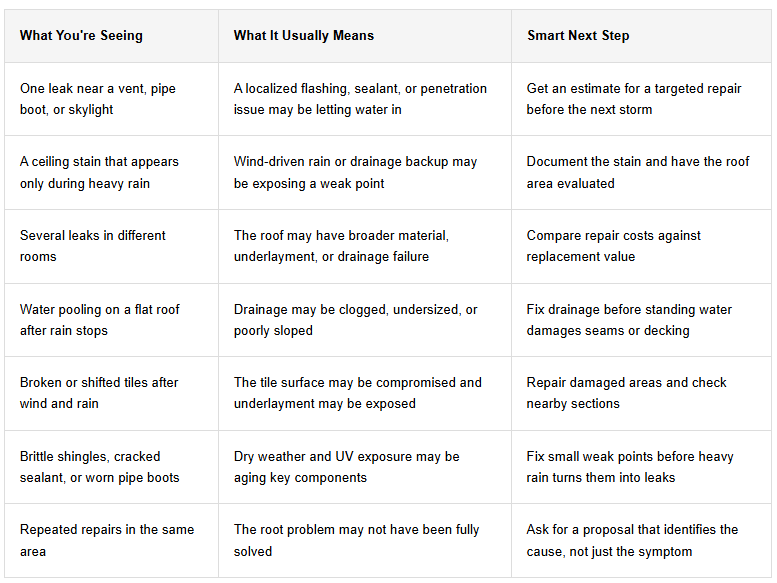
The goal is not to spend the least today and pay more later. The goal is to fix the right problem once.
Why the Cheapest Roofing Bid Can Get Expensive Fast
Nobody wants to overpay for roofing. We get it.
But a low-cost repair that fails during the next atmospheric river can leave you paying for the roof again, plus drywall, insulation, paint, electrical work, and possible mold cleanup.
A better question is this:
Will this repair solve the problem, or just hide it until the next storm?
That question can save you real money.
Permits, Materials, and California Roofing Rules Matter
Roofing is not just shingles, tile, or membrane. Depending on the project, local permits, drainage design, fire ratings, ventilation, slope, material weight, and California energy requirements may all matter.
Cool roof requirements can also apply to many California roofing projects, especially low-slope roof work. That means the right roof should do more than stop rain. It should support durability, energy performance, code compliance, and long-term value.
Need help navigating your roof financing options? Ask before work starts so your budget is part of the plan.
Guardian Roofs offers financing options through Wells Fargo, Synchrony, Mosaic, and Ygrene. During an in-home visit, one of our specialists can help you review available options for your project.
Before the Next Atmospheric River: A Practical Roof Checklist
This is where homeowners can save money. Small roof problems are usually cheaper before the storm than after water gets inside.
Before the next major rain, look for:
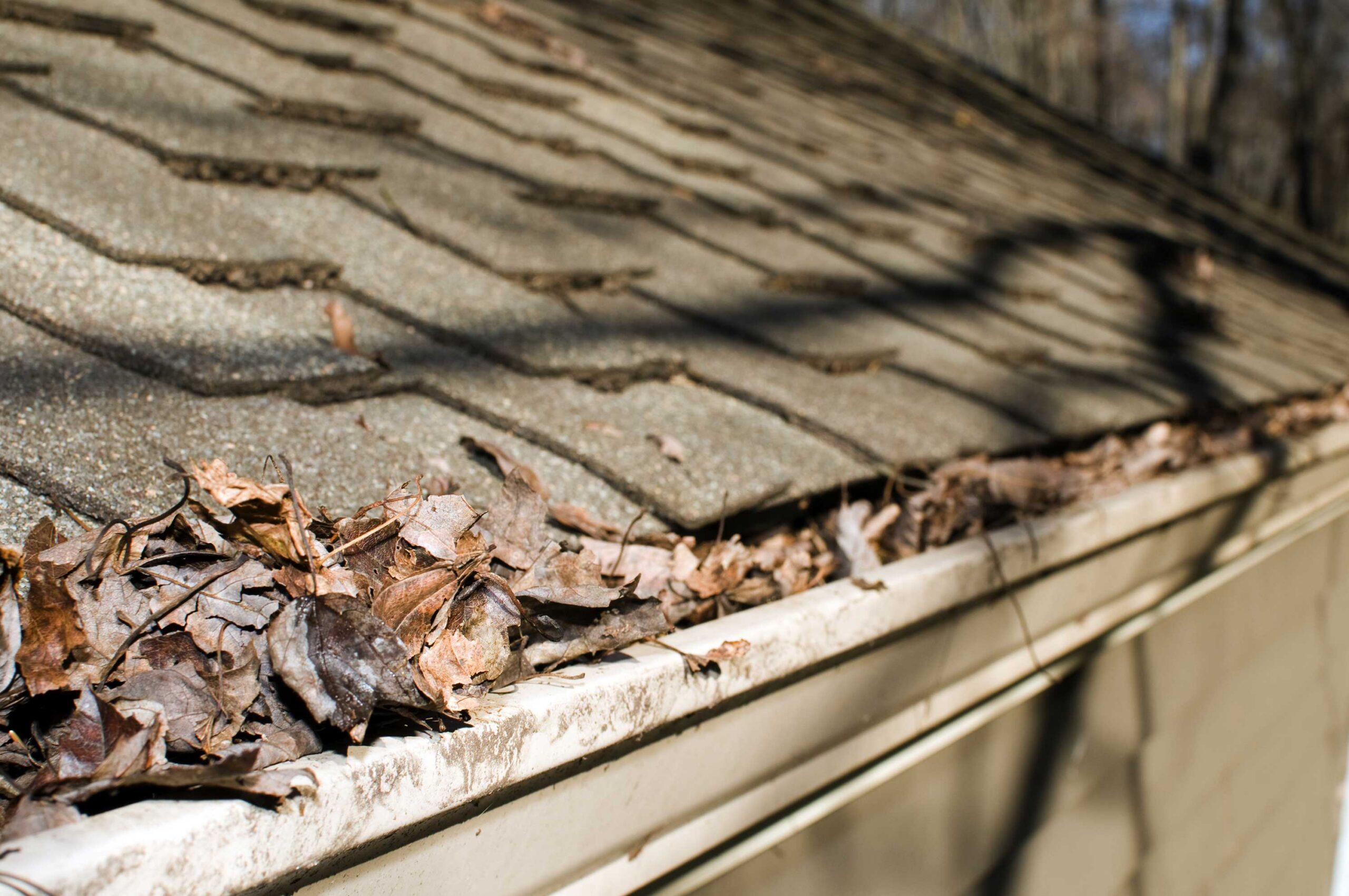
- Leaves or debris in roof valleys.
- Blocked drains or scuppers on flat roofs.
- Ceiling stains or garage drywall discoloration.
- Cracked sealant around vents, skylights, or pipe penetrations.
- Broken, slipped, or missing tiles.
- Curling, brittle, or missing shingles.
- Rusted or loose flashing.
- Water marks on flat roofing after rain.
- Soft spots, musty smells, or peeling paint indoors.
- Past leak areas that were patched but never clearly explained.
Do not climb onto a wet or unsafe roof. Check what you can from the ground and inside the home. For anything beyond that, get a professional estimate.
A good estimate should sort your roof into three categories:
- What needs to be repaired now.
- What should be watched.
- What may need replacement because repairs no longer make financial sense.
That is the difference between reacting to a leak and making a smart roofing decision.
Where Atmospheric Rivers Usually Expose Roof Weakness
Drainage Problems
Drainage is one of the first things heavy rain tests.
For sloped roofs, trouble often starts in valleys, roof-to-wall transitions, skylights, vents, chimneys, and areas where debris collects.
For flat and low-slope roofs, watch drains, scuppers, seams, parapet walls, ponding areas, and old water marks.
Warning signs include:
- Ceiling stains.
- Soft drywall.
- Musty smells.
- Blistered roofing material.
- Water rings on flat roofs.
- Standing water after rain stops.
For commercial buildings, apartments, HOAs, churches, assisted living centers, and local businesses, drainage problems are not just inconvenient. They can affect tenants, customers, inventory, electrical systems, and daily operations.
Dry-Weather Cracking
Dry weather creates the weakness. Heavy rain exposes it.
Heat and UV exposure can dry out sealants around vents and flashing. Older shingles can become brittle. Tile underlayment can wear down. Flat roof membranes can split at seams or around penetrations.
Common dry-season issues include:
- Cracked sealant.
- Worn pipe boots.
- Loose flashing.
- Broken tiles.
- Brittle shingles.
- Split flat roof seams.
- Worn coatings.
- Debris-packed drains.
The best time to handle these problems is before the first big storm, not while water is dripping into a bucket.
Flashing Failures
A lot of roof leaks start at transitions, not in the middle of the roof.
Flashing protects areas where roofing meets walls, skylights, chimneys, vents, and roof edges. During wind-driven rain, those areas get hit hard.
Here is where homeowners can get burned: someone adds more sealant, the leak stops for a while, and everyone moves on.
Then the next storm brings it back.
Sealant has its place. But caulking over a flashing problem is not the same as fixing it. If your roof has leaked in the same spot more than once, ask whether the flashing was repaired or just covered up.
Roofing Materials, Warranties, and Long-Term Value
The right roof system depends on your property, slope, budget, and how long you plan to own the home or building.
Asphalt Shingle Roofing
Asphalt shingles make sense for many homes because they balance cost, performance, and curb appeal.
Pros:
- Usually more budget-friendly than premium materials.
- Good color and style options.
- Strong warranty options when installed correctly.
- Practical for many residential roofs.
Cons:
- Lower-quality shingles can age faster under heat and UV exposure.
- Poor ventilation can shorten roof life.
- Installation details matter during heavy rain.
Tile Roofing
Tile roofing is common across Southern California. It handles sun exposure well and fits many local home styles.
But tile is not the full waterproofing system. The underlayment below the tile does the serious water-shedding work.
Pros:
- Long-lasting surface material.
- Strong fit for regional architecture.
- Good performance in sunny climates.
- Attractive for many homeowners.
Cons:
- Underlayment can fail before the tile does.
- Broken tiles can expose vulnerable areas.
- Repairs require careful handling.
Flat and Low-Slope Roofing
Flat and low-slope roofs need two things done right: the roof system and the drainage.
TPO, PVC, modified bitumen, BUR, and roof coatings may all make sense depending on the building, roof condition, slope, and budget.
Pros:
- Strong options for commercial and multifamily properties.
- Reflective materials may help with heat control.
- Good fit for large roof areas.
- Can perform well when drainage is designed correctly.
Cons:
- Standing water can shorten roof life.
- Bad seams or clogged drains can fail fast.
- Poor installation gets expensive later.
- Drainage problems may require more than surface repair.
Why Warranty Value Belongs in the Budget Conversation
A warranty is not just a line on a proposal. It is part of the value equation.
Guardian Roofs is an Owens Corning Platinum Preferred Contractor and a GAF Master Elite roofing contractor. That matters because proper installation, product selection, and manufacturer-backed systems can affect long-term value.
Qualifying Owens Corning systems may include a 50-year manufacturer warranty. Full re-roofs can include a 10-year workmanship warranty from Guardian Roofs.
That does not mean every homeowner needs the most expensive roof. It means you should know what you are paying for, what is covered, and what is not.
Let’s make your roof a smart investment.
Why Orange County Homeowners Call Guardian Roofs
Guardian Roofs is a family-owned roofing company based in Orange, CA, serving Orange County, Los Angeles County, Riverside County, and San Diego County.
Homeowners and property owners call us because they want practical guidance, certified roofing work, quality craftsmanship, competitive pricing, and a clear estimate before making a decision.
We work on:
- Residential roofing.
- Commercial roofing.
- Roof repairs.
- Asphalt shingle roofing.
- Tile roofing.
- Slate roofing.
- Cedar roofing.
- Flat roofing.
- TPO, PVC, modified bitumen, BUR, and roof coatings.
- Churches, local businesses, multifamily properties, HOAs, apartments, and assisted living centers.
- Storm damage insurance claim support.
We do not believe in pressure. We believe in explaining the problem clearly, giving you options, and helping you make a financially sound decision.
Get your no-pressure estimate today.
Orange County Roof Leak Questions Before Heavy Rain Hits
Before you spend money on roof work, it helps to know what is urgent, what can wait, and what needs a professional estimate. These answers are designed to help Orange County homeowners make a clear, budget-conscious decision before the next storm.
What should I do if my roof leaks during heavy rain?
If your roof leaks during heavy rain, move valuables away from the leak, contain the water safely, and take photos of visible damage. Do not climb onto a wet roof. Once the area is safe, call for a roofing estimate and explain where the water is entering, when it started, and whether it only happens during heavy rain.
Can dry weather really cause roof cracking?
Yes, dry weather can cause roof cracking by weakening sealants, aging pipe boots, drying out older shingles, and exposing vulnerable roof areas. Heat and UV exposure can create small openings that stay hidden for months. Heavy rain often reveals those weak spots when water finally pushes through.
Are flat roofs more likely to leak during atmospheric rivers?
Flat roofs are more likely to leak during atmospheric rivers when drainage is poor. The issue is not just that the roof is flat. The bigger problem is standing water, clogged drains, weak seams, poor slope, or aging materials that cannot handle heavy water volume.
Should I repair my roof or replace it?
You should repair your roof when the damage is isolated and the rest of the roof still has useful life left. Replacement may be the smarter financial move when leaks keep coming back, materials are worn out, underlayment has failed, or repair costs keep stacking up. A written estimate should explain both options clearly.
Does homeowners insurance cover storm-related roof damage?
Homeowners insurance may cover storm-related roof damage when the damage is sudden and tied to a covered event. It usually does not cover normal wear and tear, old materials, or deferred maintenance. Take photos, keep records, and contact your carrier if you believe the damage was caused by a storm.
How often should roof drainage be checked?
Roof drainage should be checked before the rainy season and after major storms. Low-slope roofs, homes near trees, and commercial buildings may need more frequent attention. Look for debris, ponding water, stains, clogged drains, or water that does not clear after rainfall.
Do you offer financing for roof work?
Yes, Guardian Roofs offers financing for roof work through Wells Fargo, Synchrony, Mosaic, and Ygrene. During an in-home visit, a specialist can help you review available options and understand what may fit your project and budget.
Dry Weather Sets the Trap. Heavy Rain Springs It.
Atmospheric rivers do not create every roof problem. They reveal the weak ones.
Dry weather can crack materials. Wind can pack debris into drains and valleys. Heavy rain can overwhelm poor drainage. Add standing water on a flat roof or aging underlayment under tile, and a small issue can turn into an expensive repair.
Guardian Roofs helps homeowners and property owners make smart roofing decisions without pressure. We bring over 36 years of experience, strong manufacturer certifications, competitive pricing, and a clear process from estimate to completion.
