The Timberline Solar™ roofing system is changing the way homes go solar because it treats solar as part of the roof, not something bolted on later. Instead of installing traditional panels over aging shingles, GAF Timberline Solar roofing uses nailable solar shingles that protect your home and generate power. That means one system, one installation plan, and fewer chances to pay for the same project twice.
Drive through Orange County and you can see the shift. Homeowners are thinking harder about energy costs, roof lifespan, and curb appeal. Traditional solar panels still have their place, but more homeowners are asking a better question: “If I need a new roof anyway, why not choose one that can also produce energy?”
That is exactly why Timberline Solar is getting attention. It solves one of the biggest problems with traditional solar. The roof and solar system are no longer treated like two separate projects.
Here’s what this guide covers:
- How the Timberline Solar roofing system works
- Why nailable solar shingles are different from standard panels
- How a solar shingle roof can help avoid double labor costs
- When GAF solar roofing makes financial sense
- When Timberline Solar may not be the right fit
- What homeowners should know before making the switch
If you want clear guidance before spending serious money, Guardian Roofs can help.
What Makes the Timberline Solar Roofing System Different
Most homeowners picture solar panels sitting on top of an existing roof. That setup works, but it comes with a major catch. If the roof underneath fails before the solar system does, the panels have to come off, the roof has to be replaced, and the panels have to go back on.
That is where the Timberline Solar roofing system changes the conversation.
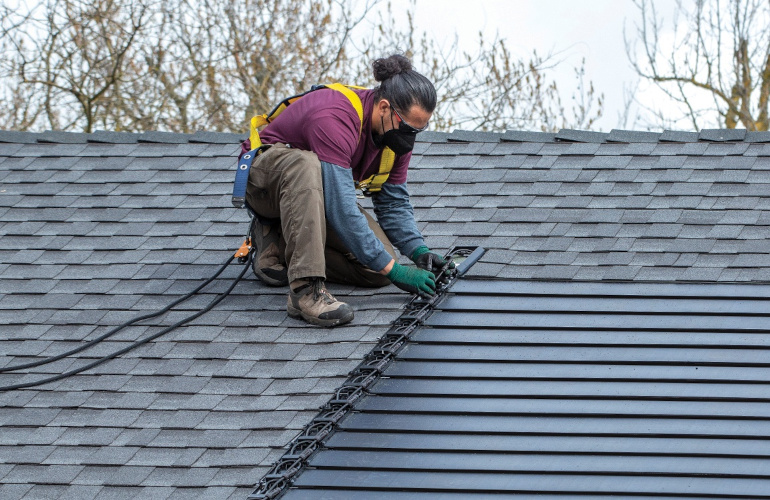
Instead of mounting solar over your roof, GAF Timberline Solar roofing uses nailable solar shingles that become part of the roof itself. They are installed with roofing materials, not treated like a separate add-on. That matters because your roof and your solar system are now planned together from the start.
For Southern California homeowners, that is a big deal. Orange County gets strong sun, which makes solar attractive. But that same sun also beats up roofing materials year after year. A solar system that lasts 20 to 30 years only makes financial sense if the roof beneath it can last too.
That is the real reason Timberline Solar is changing how homes go solar. It connects the energy decision to the roofing decision.
Why Timberline Solar Is Changing the Way Homes Go Solar
The biggest shift with Timberline Solar is simple. It turns two projects into one.
Traditional solar usually works like this. First, a homeowner replaces or keeps the existing roof. Then a solar company installs panels on top. Years later, if the roof fails, the homeowner pays to remove the panels, replace the roof, and reinstall the solar system.
That is not efficient. That is expensive.
With a solar shingle roof, the roof and solar are designed to work together. The system is installed once as part of the roofing project. That reduces the risk of mismatched timelines, extra labor, and unnecessary rework.
This is not just about technology. It is about money. Timberline Solar is changing the way homes go solar because it helps homeowners avoid one of the most common financial mistakes in solar: installing panels on a roof that will not last.
What Homeowners Should Plan Before Choosing Timberline Solar
Before choosing solar shingle roofing systems, homeowners need to look at timing, budget, roof condition, and long-term plans. This is where a smart decision gets made.
If your roof is already near the end of its life, Timberline Solar may be worth considering because you are already investing in a replacement. Instead of paying for a new roof now and solar later, you can evaluate both together.
If your roof is newer and still in strong condition, replacing it early may not make financial sense. In that case, traditional panels or waiting may be the better move.
You also need to think about permitting and code requirements. In California, roofing and solar work must meet structural, electrical, and energy standards. This is not a weekend upgrade. It is a coordinated home improvement project that needs to be installed correctly.
The goal is not to buy the newest product. The goal is to choose the system that protects your home, lowers long-term costs, and fits your timeline.
Timberline Solar vs. Traditional Solar Panels
The difference between Timberline Solar and traditional solar panels comes down to integration.
Traditional panels are mounted above the roof. They usually require racks, brackets, and penetrations. They can be effective, but they depend completely on the condition of the roof underneath.
Timberline Solar is different because the shingles are part of the roofing system. The result is a cleaner look, fewer separate components, and a system designed around the roof from day one.
That does not mean traditional panels are bad. They can still make sense for homeowners with newer roofs. But if your roof already needs replacement, installing traditional panels later may create extra costs you could avoid.
This is why the Timberline Solar roofing system is changing the way homes go solar. It gives homeowners a way to think about roofing and energy as one investment instead of two separate bills.
Why Nailable Solar Shingles Matter
The phrase nailable solar shingles may sound technical, but the idea is straightforward. These shingles are installed more like traditional roofing materials than standard solar panels.
That matters because the installation fits into the roofing process. Instead of adding a separate solar structure on top, the system becomes part of the roof assembly.
For homeowners, that can mean fewer roof penetrations, a lower-profile appearance, and better coordination between the roof and solar components. It also means the contractor’s roofing experience matters. This is not just an electrical project. It is a roofing project with built-in solar technology.
That is one of the reasons Timberline Solar is changing the market. It puts the roof back at the center of the solar conversation.
When Timberline Solar Makes Financial Sense
Timberline Solar makes the most sense when the timing lines up.
If your roof needs replacement, your energy bills are high, and your home gets strong sun exposure, then a GAF solar roofing system may be worth a serious look. You are already spending money on the roof, so combining roofing and solar can make the project more efficient.
The value comes from avoiding duplicated work. You are not paying for a roof now, solar later, and panel removal after that. You are planning the system once.
This is where homeowners can make a smart financial move. It is not about buying the flashiest roof. It is about avoiding the kind of rework that turns a good investment into a frustrating expense.
When Timberline Solar May Not Be the Right Fit
Timberline Solar is not for every home, and any contractor who says otherwise is not helping you make a smart decision.
If your roof is only a few years old and in great condition, a full replacement may not be the best move yet. If your home has heavy shade, the energy production may not justify the cost. If your energy usage is low, your payback timeline may be longer than you want.
This is where honest guidance matters. The Timberline Solar roofing system is changing the way homes go solar, but that does not mean every homeowner needs it right now.
The right question is not, “Is Timberline Solar good?” The right question is, “Does Timberline Solar make sense for my roof, my budget, and my long-term plans?”
Common Mistakes Homeowners Make With Solar Roofing
The most expensive mistake is installing solar on a roof that is already aging. That is where homeowners end up paying twice.
Another mistake is choosing based only on upfront cost. A cheaper panel setup may look good today, but if the roof needs replacement in a few years, removal and reinstallation costs can wipe out the savings.
Poor coordination is another issue. Roofing and solar have to work together. When they are treated separately, details get missed. That can lead to leaks, warranty confusion, and higher long-term costs.
Timberline Solar helps solve these problems by bringing roofing and solar into one system. But it still has to be planned and installed correctly.
A Real-World Example: Why Timing Changes the Cost
Picture a homeowner with a 15-year-old roof. They install traditional solar panels because they want to start saving on electricity right away.
Three years later, the roof starts failing. Now the panels have to come off. The roof gets replaced. Then the panels go back on.
That homeowner did not just pay for solar. They paid for solar twice from a labor standpoint.
Now compare that to a homeowner who replaces the roof and chooses Timberline Solar during the same project. The roof and solar are installed together. The timeline matches. The risk of paying twice drops.
That is why this system is changing the way homes go solar. It fixes a timing problem that has cost homeowners a lot of money.
How Guardian Roofs Helps Homeowners Make the Right Call
Guardian Roofs looks at Timberline Solar the way homeowners should: from the roof outward.
We help you determine whether your existing roof is ready for solar, whether replacement makes more sense first, and whether a solar shingle roof fits your long-term financial goals. If the system is not right for your home, we will tell you.
We bring over 36 years of roofing experience, along with GAF Master Elite and Owens Corning Platinum Preferred certifications. That matters because Timberline Solar is not just a solar product. It is a roofing system that needs to be installed with roofing expertise.
We also offer next-day estimates when available, 50-year manufacturer warranty options, and 10-year workmanship warranty coverage on full re-roofs. Need help navigating your roof financing options? We offer financing through Wells Fargo, Synchrony, Mosaic, and Ygrene.

Timberline Solar Roofing Questions Orange County Homeowners Ask Before Making the Switch
Before deciding if the Timberline Solar roofing system is the right move, most homeowners want clear answers about cost, timing, and how it actually compares to traditional solar. These questions come up often when people are trying to avoid costly mistakes and make a smart long-term decision.
What is the Timberline Solar roofing system and how does it work?
The Timberline Solar roofing system is a GAF solar roofing system that uses nailable solar shingles to generate electricity while functioning as your primary roof. Instead of panels mounted on top, the solar components are built directly into the roofing system for a more integrated design.
Are Timberline Solar shingles better than traditional solar panels?
Timberline Solar shingles are better than traditional solar panels when your roof already needs replacement and you want one system instead of two separate projects. Traditional panels can still make sense for newer roofs, but they rely on the condition of the roof underneath.
Is the Timberline Solar roofing system worth the extra cost?
The Timberline Solar roofing system is worth the extra cost when it helps you avoid paying for separate roofing and solar installations. The long-term value comes from installing everything once instead of dealing with removal and reinstallation later.
Can Timberline Solar be installed on an existing roof?
Timberline Solar can be installed on an existing roof in some cases, but it is typically installed during a full roof replacement because it is designed to be part of the roofing system. Installing it on an aging roof usually does not make financial sense.
How long does a Timberline Solar roof last compared to a regular roof?
A Timberline Solar roof lasts a similar amount of time as a standard roofing system when installed correctly, often 20 to 30 years or more depending on conditions and maintenance. The key is aligning the roof lifespan with the solar system lifespan.
What is the biggest mistake homeowners make when installing solar roofing?
The biggest mistake homeowners make when installing solar roofing is putting solar on a roof that will not last as long as the system. This leads to paying for removal and reinstallation, which can significantly increase the total cost.
Does Timberline Solar increase home value in Orange County?
Timberline Solar can increase home value in Orange County by lowering energy costs and improving curb appeal with a clean, integrated solar shingle roof. Buyers often see added value in a system that is built into the home rather than mounted on top.
Final Thoughts: Why Timberline Solar Is Changing the Way Homes Go Solar
The Timberline Solar roofing system is changing the way homes go solar because it solves a real problem. It connects the roof and the solar system into one decision.
That matters because the smartest solar investment starts with a roof that is ready to support it. If your roof is aging, installing panels on top may cost you more later. If your timing is right, Timberline Solar can help you protect your home and lower energy costs without treating roofing and solar like separate projects.
Guardian Roofs brings the experience, certifications, and straight answers homeowners need before making that kind of investment.
Thinking about Timberline Solar? Start with a roof that will not cost you twice. Get your no-pressure estimate today.
